Friday, October 22, 2010

Blogging 101

We have all been there, sitting in front of a computer signing up to begin a blog. Oh, that part is easy, do this, do that, click, apply. Wow! I have a blog.


Nasturtiums still blooming, where did that color come from?

Most of us realize pretty quick that there is no one to answer the multitude of questions that we have. Sometimes, we find a friend online who will give us some basic information on how to upload photos, how to keep those photos with the post, how to put a photo on a header that doesn't look giant and many more.


Cabbages on one of my neighborhood excursions.


I met a fellow blogger at one of my garden club meetings. Her name is Mary Anne and she is an interior designer who owned a retail design shop for twenty-four years.  She had already hired someone to help her with the intricacies of blogging but, as we all know, blogging is not just computer expertise.


This was the home I went by a couple of weeks ago where a crew was putting in the plantings.  It turned out to be both mums and cabbages.


We found lots of bargains at Home Depot for  my daughter-in-law's alley garden, daylilies for $1.97???

Being about ready to pull her hair out we made a date to do some blog set-ups on the new Template Designer.  After figuring out how she could log on to my computer as a new user (she did not have a laptop) we were on a roll, picking a template, choosing colors, print style, adjusting widths, etc., so much to do, so little time.


Miscanthus Pupurescens Flame

It is not over, is it ever?  But, Mary Anne is on her way as a new blogger with many more questions, experimentation and friends to meet.


Panicum Northwind

I have spiced up this blog today with some of my waning garden photos.  You can visit Mary Anne at http://alwaysrobinseggblue.blogspot.com/


Miscanthus (not sure of the name)

Remember, it is a work in progress, the header may change, colors, text and layout may change but we are all happy to support new bloggers.


Happy Weekend!

Wednesday, October 20, 2010

How Strange Is This?

It is just my serious garden group meeting and I mean serious!  Our workshop this day was on organic gardening with ammonia, yogurt, vinegar and molasses.  I don't think I could possibly fit in everything in just this one blog, but you will get the idea of where this is going.


The maple that overlooks my garden from my neighbor's home

Our presenter was a graduate of Ornamental Horticulture at a big ten university, so the credentials were there.  I was all ready to listen and find out how to get rid of my rose midges.  So I asked, how do I get rid of the rose midge?  Our presenter said he had never heard of this (although it is all over the internet) but that all insects will disappear if we use a formula to help the plant repel all infestations.  Pesticides did not appear until after WWII and before that just about everything had an organic solution.  I guess they just didn't know what to do with all of those leftover chemicals!

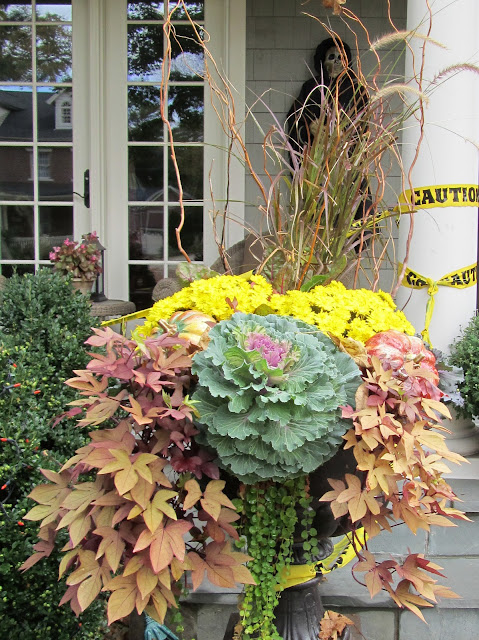
This is my daughter-in-law's container that we put together with the bronze sweet potato vine left over from the summer with Creeping Jenny, mums, cabbages, grasses, and willow.

The consensus is that if the plants are healthy they will not support disease.  It sounds feasible so I was totally focused on listening to these remedies that were in existence before I was born. 

2 ounces of Blackstrap Molasses
2 ounces of Cider Vinegar
2 ounces of Ammonia (non-sudsing)

Mix with one gallon of water and do one time each week.  Start this recipe when the plants have been in the ground about 5 to  6 weeks.  Do not use on spinach, lettuce or swiss chard.

He said this is what would cure my rose midges and to use it this fall so that it is in the ground before frost.

Stop using Killer Chemicals he said.  Plants don't have stomachs, so the digestion has to happen in the soil.

Liquid weed killers are better than than dry because they are absorbed in the leaf and stay out of the soil.  Dry killer chemicals get into the soil and do a lot of damage. Spot weeding is his recommendation.  He is a big proponent of gypsum and milorganite,both of which have been around for a long time.

He says grass is a sun plant and don't even attempt to grow it in the shade, choose mulch or shade plants.  I know, you are saying there is "shade grass," but he says it will never do well because all grass wants sun.

He recommends planting trees that are meant for your area, know what your soil has and needs, apply gypsum every year if you have clay soil, mow high, water the lawn for one hour, once per week from mid September to Halloween (remember some of these suggestions are meant for zone 5 which is getting ready to shut down for the winter - warmer climates move the months forward somewhat).

You can check this all out at http://www.pure-prairie-organics.com/

There was so much more that I am totally confused at this point in regard to proper fertilizations and insect interventions. As I departed, I asked our hostess if he taught a class anywhere in the area.  She said she would certaily check this out.  I feel I know so little about these organic interventions at this point and I certainly don't want to put any of my plantings in jeopardy.

This is a little Irish Cottage that my son built for his youngest daughter.  It has become a playhouse for the whole family.

I will try this organic intervention on my roses as the chemicals have not worked and they are not setting buds.  I will let you know what happens, although it may not be this year!

It's getting a lot scarier around here!

Monday, October 18, 2010

Fall Bulb Planting

The most important step in planting bulbs in the fall is to purchase large, high quality bulbs.  The 14/15 or 16/17 notations relate to the size of the bulb.  The higher the numbers the larger the bulb which will produce more and larger blooms.  Make sure the bulbs are firm, not soft or moldy.


This is Itzim Daffodil laid out in alternating triangles.  It is a smaller daffodil so I place them four or five inches apart.

Daffodil Itzim is a good replacement for Tete-A-Tete because it has a longer bloom time and is approximately the same size.

I use an auger attachment on the end of a drill to get through difficult soil and groundcovers, smaller bulbs that require more shallow planting can be put in with a hand trowel.  Some people dig large areas and place many bulbs in groupings.  This only works if you know there is nothing else in the area that you will disturb.

The Lirope that grows under the pear tree has been cut back because it is very difficult to plant in this area and the grass turns yellow during the winter.  It softens quite a bit and is very difficult in the spring.


I sprinkle a little bulb fertilizer in the hole, mix it up a little, put the bulb in point up.  If you're not sure which is the top you can always lay it sideways and it will come up just fine.


We put in some more Orange Emperor Tulips around the Chanticleer Pear.  Here it is pictured with Sweetheart Emperor.

Another very early daffodil called Early Sensation was added to the borders in front of the house.  They are pictured above on the south side of my home last spring - long blooming.

Cover with soil and mulch, tamp down with your feet when done, supposedly this will help deter critters.  I'll try anything as I have a major problem with squirrels in the fall and rabbits in the spring, mostly for tulips.  Plantskydd for Critters seemed to help last year and I also used chicken wire with metal garden staples.

I also put in three different varieties of Orienpet Lilies (a cross between Asiatic and Oriental Lilies).  They range in height from three to six feet.  They look great peeking out from behind other plantings, phlox, roses, daisies, etc.

Conca d'Orr

Lavon

Satisfaction

Bulbs can be planted until the ground freezes hard.  I have actually planted bulbs as late as December in zone 5 (not a recommendation).

It seems like a lot of work but so rewarding to look out and see the fruits of your labor in the springtime!

Friday, October 15, 2010

Around The Garden

I haven't done Around The Garden in a while so I figured I had better do it this week or there will be nothing left!

This is the tree across the street from my home, pretty well into shutting down for the season.  But, I still have the last vestiges of summer going on at my place.

Comtesse De Bouchard is still blooming after deadheading about two months ago,

I clipped Fireworks here and there and this is what it is doing.  I should have clipped it more - next year.

This is a clematis that is blooming on the same trellis as Miss Bateman.  It looks a little like Bee's Jubilee, but I don't remember planting this back there.  I think I found it, John Paul II, remember planting it a few years ago and I thought it had died.

I have never seen Creeping Jenny turn this color before.  I know it winters over in zone 5, but in other areas of my garden it is just green.  This was growing in with my tuberous begonias - maybe a different variety.  I like it!

Nicotiana Alata did very well this year.  I think I will leave some standing this fall so it will reseed.

When I pulled this out it still looked pretty good.  I found the tag underneath the roots.  It is called Pineapple Splash - glad I was finally able to identify this lacy coleus.

Echinacea White Swan is still blooming.  This one has done much better this year than the pink ones.


When Eupatorium Chocolate blooms each fall I am glad to see it.  However, all summer long I look at this brown plant and it looks just boring next to all of the color.

Rudbeckia Denver is in my concrete containers still getting many new buds.  I am going to try to winter this over in the garden when I remove them in last part of November.  I think I will put them in the veggie garden with the very good soil.  They are a perennial, but I will be putting them in quite late.

I was really mad at the rabbits this year relentlessly eating Aster Purple Dome, but I think this is the best it has every looked.  This gives me the message that I should prune it down next spring if the rabbits don't do it for me.

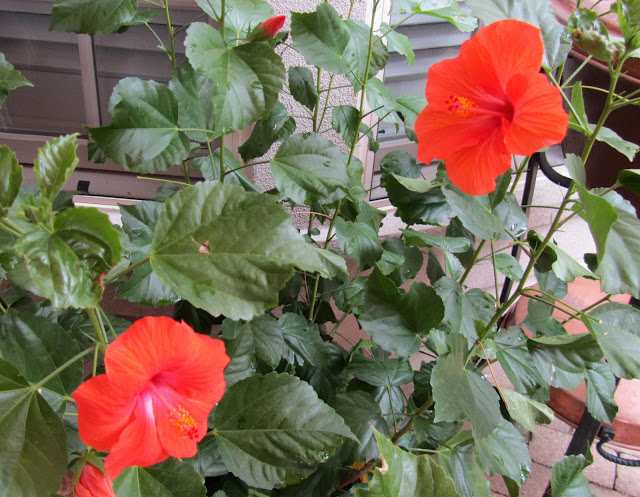
The Orange Mango Hibiscus is still blooming on the patio.  I don't have room for them inside so it will not last much longer.


My Rainbow Knockout is the only rose I have left blooming.  My other Knockouts, pink, red, blush all have a disease called rose midge.  My Rainbows have not been affected, another reason to grow this rose!

Rainbow looks very nice when paired with Perilla.  The Perilla is an annual in zone 5 and related to the coleus family.

The Nasturtiums do not like intense heat but they love the weather we are having now, lush with many buds.  Too bad, they won't last through a frost.

Fall changes beginning on Little Henry's Garnet.  I have had many problems with this plant but this is the first year that I have seen the overall color changes and it looks healthy.


Echinacea Meadowbrite Mango still blooming amongst the mums, rudbeckia, cabbage, petunias and sedum


Look who's on my pansies, hope the dragonfly is okay.  There was no movement when I took the photo.

Wednesday, October 13, 2010

A Green Market Chef

Our second meeting of the fun garden group was yesterday!  As we all gathered in our host's beautiful home we were introduced to our talented chef who would not only prepare lunch for us but school us in the attributes of a green market restaurant.


Green Market cooking at home or operating a Green Market restaurant takes some planning.  It is difficult to do this for more than six months out of the year in our zone five.  I know you are thinking right now, I can get anything I want at the local grocery store or the organic supermaket.  Green Market means locally grown, no exposure to pestisides or pollutants such as gasoline or exhaust from the big shipping trucks.  I know this is difficult to attain but this is what our Green Market Restranteurs are trying to achieve.

Our chef studied in France and at the Culinary Institute in upstate New York.  He has his own restaurant called Socca in Chicago.

I know not everyone is into growing vegetables but just think about how much you can control when you are growing them in your own garden.

The lunch was prepared in our host's home and then transported to the Historical church a few door from this home.  Our appetizer was a sweet potato and apple soup with asparagus wrapped in proscuitto. 

On to lunch at a vintage church hall that was saved by the community a few years back.  Our garden club has been instrumental in helping with a redo on the landscaping.  This is an ongoing project and will continue next spring.

The church was built in 1900 by German immigrants for their congregation.  It is a carpenter - Gothic stlyle building. 

Through the years it has served as a church, office space and a preschool.  The Historical Society led a successful effort to save the church from demolition.

After two years and a one million dollar mostly privately funded renovation the church was granted historic status and put on the National Register of Historic Places.  It reopend in 2008 and is now used for multiple community functions.


The beautiful stained glass windows are throughout the church, on both sides and up in the balcony.

Spinach, greens and a brined seared chicken, with a pumpkin and yogurt mini quiche on top, yum, yum!  The dessert was to die for, a bread pudding made with croissants drizzled with chocolate and topped with whipped cream.

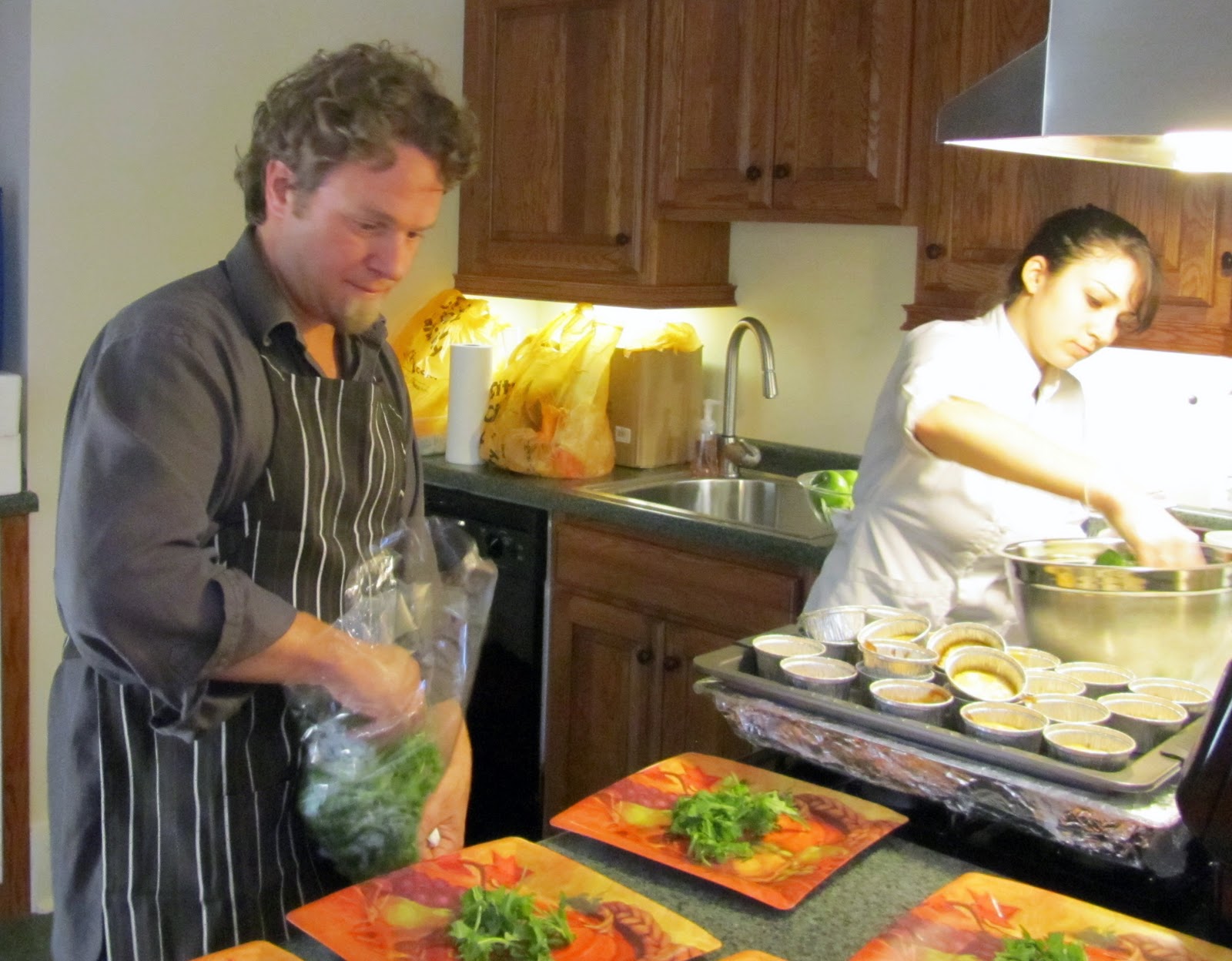
Our chef Roger and his assistant busily put the finishing touches on lunch in the church kitchen.