Showing posts with label garden club. Show all posts

Wednesday, October 20, 2010

How Strange Is This?

It is just my serious garden group meeting and I mean serious!  Our workshop this day was on organic gardening with ammonia, yogurt, vinegar and molasses.  I don't think I could possibly fit in everything in just this one blog, but you will get the idea of where this is going.


The maple that overlooks my garden from my neighbor's home

Our presenter was a graduate of Ornamental Horticulture at a big ten university, so the credentials were there.  I was all ready to listen and find out how to get rid of my rose midges.  So I asked, how do I get rid of the rose midge?  Our presenter said he had never heard of this (although it is all over the internet) but that all insects will disappear if we use a formula to help the plant repel all infestations.  Pesticides did not appear until after WWII and before that just about everything had an organic solution.  I guess they just didn't know what to do with all of those leftover chemicals!
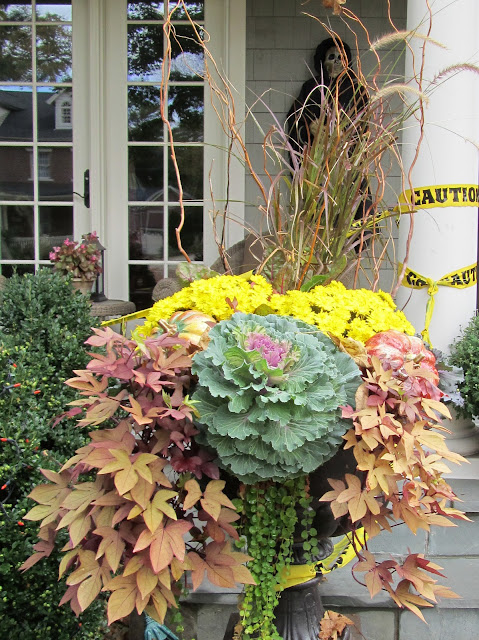
This is my daughter-in-law's container that we put together with the bronze sweet potato vine left over from the summer with Creeping Jenny, mums, cabbages, grasses, and willow.

The consensus is that if the plants are healthy they will not support disease.  It sounds feasible so I was totally focused on listening to these remedies that were in existence before I was born. 

2 ounces of Blackstrap Molasses
2 ounces of Cider Vinegar
2 ounces of Ammonia (non-sudsing)

Mix with one gallon of water and do one time each week.  Start this recipe when the plants have been in the ground about 5 to  6 weeks.  Do not use on spinach, lettuce or swiss chard.

He said this is what would cure my rose midges and to use it this fall so that it is in the ground before frost.

Stop using Killer Chemicals he said.  Plants don't have stomachs, so the digestion has to happen in the soil.

Liquid weed killers are better than than dry because they are absorbed in the leaf and stay out of the soil.  Dry killer chemicals get into the soil and do a lot of damage. Spot weeding is his recommendation.  He is a big proponent of gypsum and milorganite,both of which have been around for a long time.

He says grass is a sun plant and don't even attempt to grow it in the shade, choose mulch or shade plants.  I know, you are saying there is "shade grass," but he says it will never do well because all grass wants sun.

He recommends planting trees that are meant for your area, know what your soil has and needs, apply gypsum every year if you have clay soil, mow high, water the lawn for one hour, once per week from mid September to Halloween (remember some of these suggestions are meant for zone 5 which is getting ready to shut down for the winter - warmer climates move the months forward somewhat).

You can check this all out at http://www.pure-prairie-organics.com/

There was so much more that I am totally confused at this point in regard to proper fertilizations and insect interventions. As I departed, I asked our hostess if he taught a class anywhere in the area.  She said she would certaily check this out.  I feel I know so little about these organic interventions at this point and I certainly don't want to put any of my plantings in jeopardy.

This is a little Irish Cottage that my son built for his youngest daughter.  It has become a playhouse for the whole family.

I will try this organic intervention on my roses as the chemicals have not worked and they are not setting buds.  I will let you know what happens, although it may not be this year!

It's getting a lot scarier around here!

Wednesday, October 13, 2010

A Green Market Chef

Our second meeting of the fun garden group was yesterday!  As we all gathered in our host's beautiful home we were introduced to our talented chef who would not only prepare lunch for us but school us in the attributes of a green market restaurant.


Green Market cooking at home or operating a Green Market restaurant takes some planning.  It is difficult to do this for more than six months out of the year in our zone five.  I know you are thinking right now, I can get anything I want at the local grocery store or the organic supermaket.  Green Market means locally grown, no exposure to pestisides or pollutants such as gasoline or exhaust from the big shipping trucks.  I know this is difficult to attain but this is what our Green Market Restranteurs are trying to achieve.

Our chef studied in France and at the Culinary Institute in upstate New York.  He has his own restaurant called Socca in Chicago.

I know not everyone is into growing vegetables but just think about how much you can control when you are growing them in your own garden.

The lunch was prepared in our host's home and then transported to the Historical church a few door from this home.  Our appetizer was a sweet potato and apple soup with asparagus wrapped in proscuitto. 

On to lunch at a vintage church hall that was saved by the community a few years back.  Our garden club has been instrumental in helping with a redo on the landscaping.  This is an ongoing project and will continue next spring.

The church was built in 1900 by German immigrants for their congregation.  It is a carpenter - Gothic stlyle building. 

Through the years it has served as a church, office space and a preschool.  The Historical Society led a successful effort to save the church from demolition.

After two years and a one million dollar mostly privately funded renovation the church was granted historic status and put on the National Register of Historic Places.  It reopend in 2008 and is now used for multiple community functions.


The beautiful stained glass windows are throughout the church, on both sides and up in the balcony.

Spinach, greens and a brined seared chicken, with a pumpkin and yogurt mini quiche on top, yum, yum!  The dessert was to die for, a bread pudding made with croissants drizzled with chocolate and topped with whipped cream.

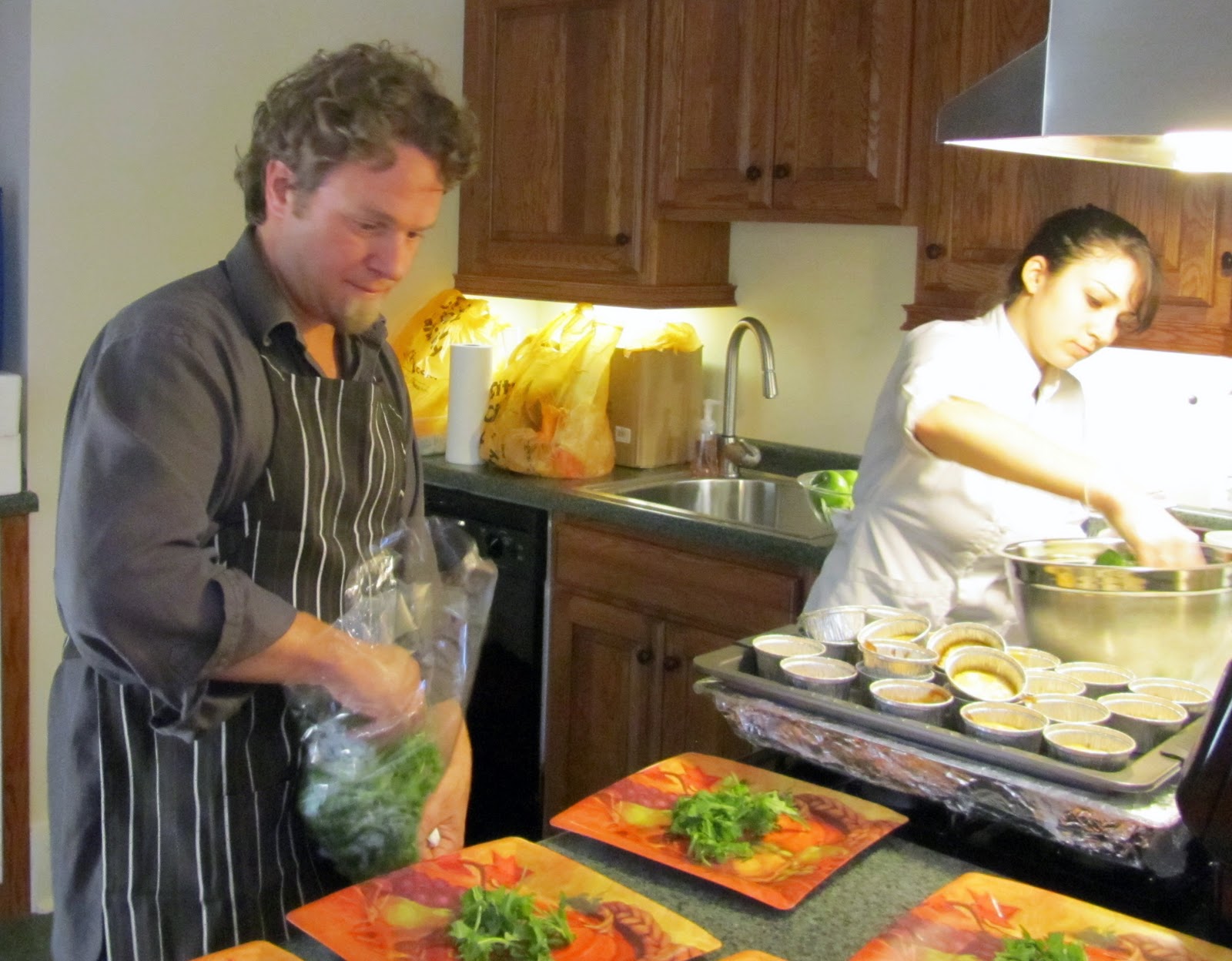
Our chef Roger and his assistant busily put the finishing touches on lunch in the church kitchen.


Thursday, June 24, 2010

Thirty-Nine Steps

I think this was the name of an old movie, but it certainly became real for me as I climbed a hardly countable number of steps to my serious (serious because we do community service work) garden club meeting.  This was the last luncheon and meeting of the season, not beginning again until September.

The home we were at today is in a deeply wooded area, very high up, enough so that we were commenting on the lack of railings and our progressive eyeglasses.  This was a home without grass, which is a blessing in regard to mowing, but a lot of work considering the amount of plantings and the various levels in the front and back of the home.

Again, my anxiety level rises when I think of my ability to care for this type of landscape.  After lunch, we all trekked out to visit a member's garden close to my home.  It was a garden surrounding a 110 year old home, stained in a redwood finish.  This setting gave me a feeling of serenity, surrounded by natural meandering mulched paths bordered by large hostas, ferns groundcovers, daisies  and multiple woodland plants in various stages of bloom. 

Everything was small, contained, controllable and charming, even the small patio with potted plants and a dining table ready for an enchanting evening.

I have had small properties with definite planting restrictions and a large property where the sky was the limit.  I am now on a small property again, frustrated at times that I cannot grow all of the lovelies I see on blogs.  But, I remind myself that this is what I can handle.

Friday, May 21, 2010

Gardening With Friends

Gardening is fun, it is rewarding, obsessive and lonely unless you have special gardening friends.  There is nothing better than doing the nursery field trips looking for those special plants each year.  It is even more rewarding if you have someone that shares that wanderlust each spring when it's time to hit the garden centers.

I have such a friend who is willing to drop everything and look for plants, even going out of state to visit a unique garden center!  We have travelled miles together looking for those new introductions, attending plant walks, workshops, etc.  I talked her into joining my garden group, and I think she feels it was a good choice, lots of obsessive gardeners all in one place with lunch thrown in and usually a speaker.

Garden blogging is a wonderful connection for gardeners but it does not replace climbing into the 4-wheel drive with a buddy to go "plant chasing."

Sunday, May 16, 2010

Color In The Garden

I went on a garden dig awhile ago to glean plants for a sale to benefit our local historical house.  This is part of our community involvement activities that we do with the garden club throughout the year.  The property is expansive and I felt I was at an arboretum rather than a private home.  I experienced a level of anxiety knowing I would never be able to take care of this property.

Nevertheless, I had met the owner of this property previously at the Midwest Garden Symposium at the Morton Arboretum.  She is what the English call a Plantswoman, very knowledgeable about her plantings but still normal enough to say, "Oh, I don't remember the name of that one." 

Her opinions about color were important and somewhat surprising to me.  She uses no pale colors, like pale pink, violet, light yellow, peach, etc.  Our master gardener feels that only bright colors pop in the garden, like reds, purples, bright yellows, vivid oranges and always white.  I am afraid I have to depart from this opinion especially for my back garden where I love the softness of the pinks in the heat of the summer.  I am even doing pink as a theme in my front garden along with reds, pale yellows, white, magenta and blue. 

The back patio heats it up a little with bright orange geraniums and orange hibiscus, softer fountain plants variegated Algerian Ivy and Cordyline for a centerpiece on the coffee table.  All of the surrounding areas are laced with pinks, whites, blues, white and bright rosy orange.  I think my master gardener friend was correct when she mentioned that you can put orange and red together if you mix in purple, stunning by my vegetable garden!

I feel I am creating a mood, not necessarily a color palette.  It is also important to note that when you have very little frontage to your property you do not necessarily need vibrant colors that pop.  You are close and personal to each person who walks by or comes to your home.

I guess what I really learned from this digging experience is to know when to quit, not quit gardening but to quit going on and on and on when you know you can't do it anymore.  One never has to quit gardening, just quit gardening so much!

Thursday, April 15, 2010

Lunch At The Garden Club

The fun garden club has gone back to lunch meetings.  The no lunch situation just began in September and it was not popular.  Wow, what a difference, we could hardly fit everyone in our host home.  I was on the lunch committee today so I was very busy being a hostess.  Many people came out of the woodwork when they heard "lunch."  It was at a beautiful home build in the late 1880's, lots of remodeling, but retaining the original character of the home.

The driveway and the patio brick was from a past era, and the gardens looked true to the original time period of the home.  Our lunch was a wonderful salad of tortellini on a bed of lettuce with bread sticks and salami gorgonzola biscuits with chive butter.  The deserts were yummy, carmel brownies and homemade chocolate chip cookies.

This was a very active crowd who could barely stop talking to hear the presenter.  It is amazing what food will do!  Our speaker was a Botany major in school and has a business as a garden designer and coach.  She spoke on roses, their requirements, culture, pruning and her favorites for our area.  She demonstrated pruning techniques on a real rose bush and answered questions on fertilizing, coffee grounds (not a proponent of using coffee grounds) and protection for the winter (mulch - not rose cones).  She recommended compost as a first course when planting and then the Bayer Systemic throughout the season until August.

I am showing some of her recommendations for our (zone 5) area, but I am sure many will do well in several zones.  There were many more listed, but I just picked out one in each category.  I have had problems with the original cherry colored Knockout, but I agree with our speaker that it is still the most desirable.  The doubles grow smaller and do not have the same spreading habit as the original.  I would say the Rainbow Knockout, even though the flowers are smaller, has a similar spreading growth habit to the original Knockout.

Tuesday, March 09, 2010

Food for the Gods

The "fun group" had their Garden Club Meeting yesterday and it was fabulous!  As we approached the front door, there were emerging daffodils and tulips in painted tin pails and blooming primrose in a decorative urn. Our host is an artist by trade and her home is a testament to her talent.  I would compare it to Monet's garden with colors that make you feel alive, pinks, lime greens, yellow, deep pinks and white as the color that pops.  Her oils and other mediums were displayed throughout the home all blending with the bright backgrounds.  There were about thirty of us there today and we were invited for lunch and a program on olive oils and vinegars.

There were italian mineral waters, taglio and brie cheeses drizzled with balsamic vinegars with little crusty pieces of bread.  The smells coming from the kitchen were magnificant - I couldn't wait any longer -  I had to go in.  The cook (my artist friend) presented the menu, fresh roasted vegetables with cherry tomatoes drizzled with tuscany olive oil and three leaf balsamic vinegar, homeade pasta noodles drizzled with more olive oil, more balsamic vinegar, sea salt, Wow!  I haven't even gotten to the chicken yet.  The chicken was pounded flat, dipped in egg, rolled in japanese bread crumbs, topped with an apricot mixture and sizzled in the oven in more olive oil.

We learned that some olive trees are thought to be thousands of years old and that not all olive oil is the same.  In fact some may not even be olive oil but hazelnut oil mascrading as olive oil.  Do not keep olive oil indefinitely - it has about a two year shelf life from pressing.  Unless it says 100% olive oil on the label it probably is not.  We don't always know when this oil has been pressed unless bought at a speciality shop.

Balsamic vinegars are like wine although they are not wine vinegars. being made from grapes that have never fermented.  Balsamic spends time curing in kegs and comes in many different colors and flavors.  I had never thought of adding vinegars to fruit but it was delicious on the strawberries - three leaf balsamic.  The "leaf" notations have to do with the thickness of the vinegars, the thickest being four leaf.

I am always amazed how gardening interconnects throughout our lives.