Thursday, July 12, 2012

The Lurie Gardens

We have a former coworker in from South Carolina who had never been to Millennium Park before moving down south.  So, a group of us all boarded the "milktrain" into the city getting on at various stops along the way.  The extra time to get there was fine with us because we are never without a great deal to talk about.

The Bean is what most people come to see at Millennium Park.  After so much controversy when it was being built, it has now becomes the main draw for families and adults alike.

In the beginning the controversy was centered about the money it was costing to achieve this gleaming finish.  It is like a landscape painting looking at all of the reflections of the people, buildings and skyline of Chicago.

This is the water wall that is a huge attraction and activity for the children.


There is a lot of construction going on so the bus that usually departs for the park outside the train station was no longer stopping there.  We just kept walking east towards Lake Michigan and in no time we had arrived, again too much talking.

The Pritzker Pavillion is very futuristic looking with steel jutting out in all directions.

We were thrilled to hear the rehearsal for a tribute to Frank Loesser who wrote the music for Guys and Dolls, great music!

The Lurie Gardens (planned by Piet Oudolf) are probably in the hottest section of the park with very little tree cover.  Even though the temperatures approached 90 degrees that breeze from the lake made the gardens bearable with short respits along the perimeters where there were some trees.

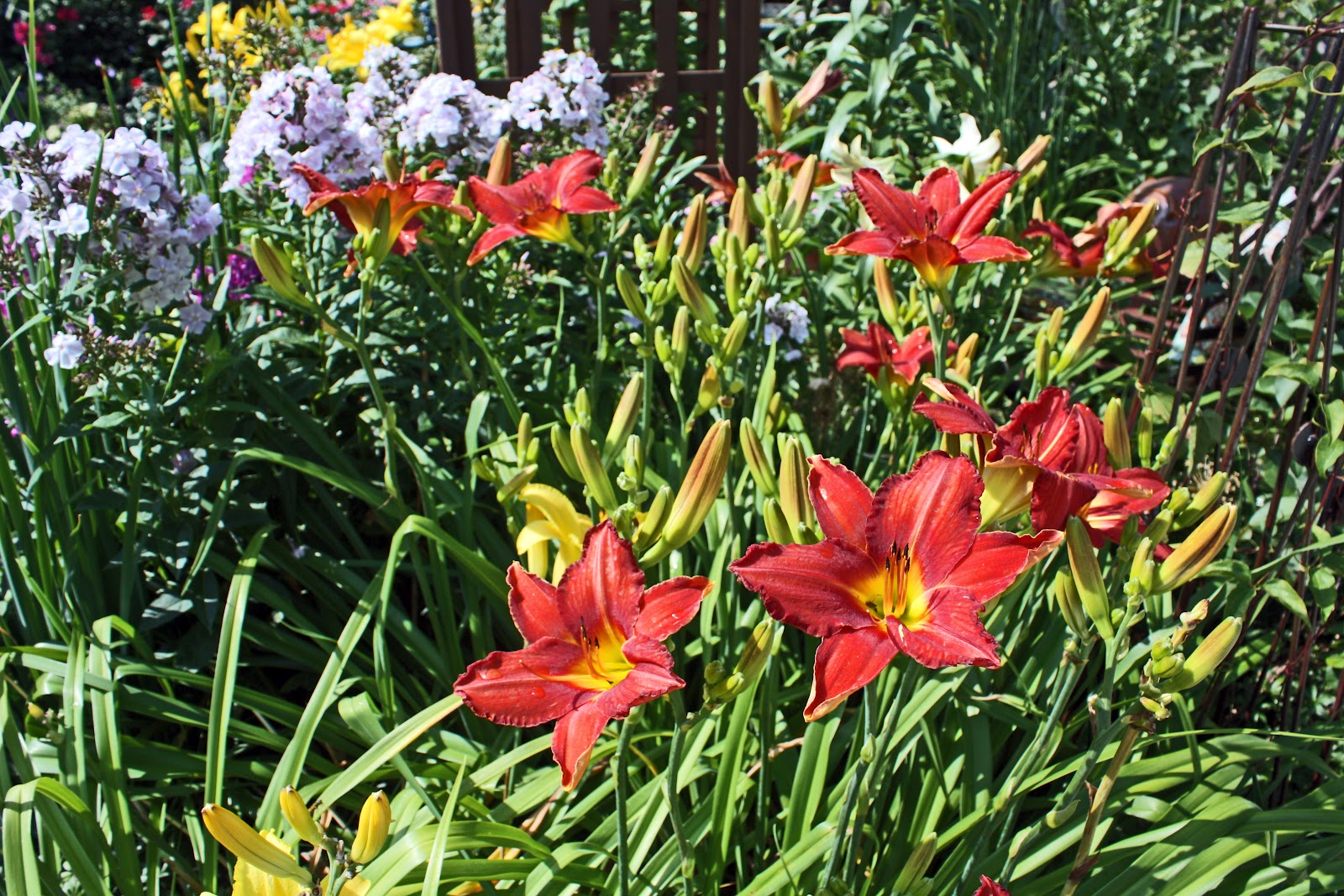
Chicago Apache Daylily


The specimens are not identified as they state that they are not a botanic garden, but it is frustrating to walk through a display garden such as this and not have anything labeled.  They do identify all of their plants on the Lurie Garden website but is is like a game trying to match a photo to the name.

The philosophy, structure such as spiky, soft, arching, color, tall and rough.  These are all working together without that patterned look.

I am the last gardener who could implement this look in my small garden, but I can certainly use this philosophy of not worrying about our age old planting system of repeating plants, planting in threes, fives, etc.  I am now looking at structure, colors, mood, softness and trying to repeat these attributes rather than just using the same plants throughout the border.

There is a major use of Allium Summer Beauty throughout the plantings and the flowers still look great.

Prairie Dropseed With Allium

Softness, Filipendula rubra venusta

Anemone hupensis japonica splendens

Spikiness and roughness also works with softness


The Karl Foerster grass looked great much better than mine up in Wisconsin.

Veronicastrum Virginicum Diane


This is a spiky grass that also has softness, Panicum Shenandoah.  I am trying to incorporate this into my back border so there is some color during the winter.  Shenandoah is a shorter grass, narrow, and blends in great with perennials.


Again, we see the extensive use of allium, with some coneflowers and the softness of Amsonia Hubrichtii in the background.


I have come to the conclusion that most of us cannot have a Piet Oudolf garden but we can use some of his ideas to make our gardens more seasonally interesting. 

Well we were headed back home on the "milktrain" again but time flew as we were still talking!

Thursday, July 05, 2012

Close

It was not my intention when first planting my garden to make it weed and heat resistant.  I had this small space and wanted to grow so many plants that I had to layer them for successive bloom times.

Becky Shasta can become floppy after a storm or when they get as large as they have this year.  The firmness of the Knockout roses in the foreground give them some stability.  Once the Becky Shastas and Lavon Lilies are finished, they will be trimmed, lilies a small amount and shastas to the ground.  The roses will take over again and bloom until the first frost.

Red Rum is a shorter daylily in this full border.  They will be cut down when finished blooming and again the roses and heucherellas, perennial geraniums and brunnera will take over.


There are many benefits to growing plantings close together, i.e., weed control, moisture retention because the roots are shaded, support for surrounding plants on the sides and back and blooms throughout the season.

This is a mid-season blooming phlox, unlabeled last year at Home Depot.  I think it might be Peppermint Twist.  You can have phlox blooming all season if you plant varieties with different bloom times and extend them even further by deadheading.  Blue Paradise in the background is the first and last to bloom in my garden.

Laura is a shorter phlox and covers up the stems and possible brown leaves of Franz Schubert.  I always grow something in front of phlox, such as, daylilies, roses, etc.

Chicago Rosy Daylily covers the stems of Franz Schubert on the driveway side.

Bubblegum Phlox is beginning to bloom in the island bed.

Eileen Clymer Daylily blooms in front of it on one side and Lavon Lilies on the other.

Orienpet Lavon Lilies

Chicago Apache Daylily

Don Stevens Daylily

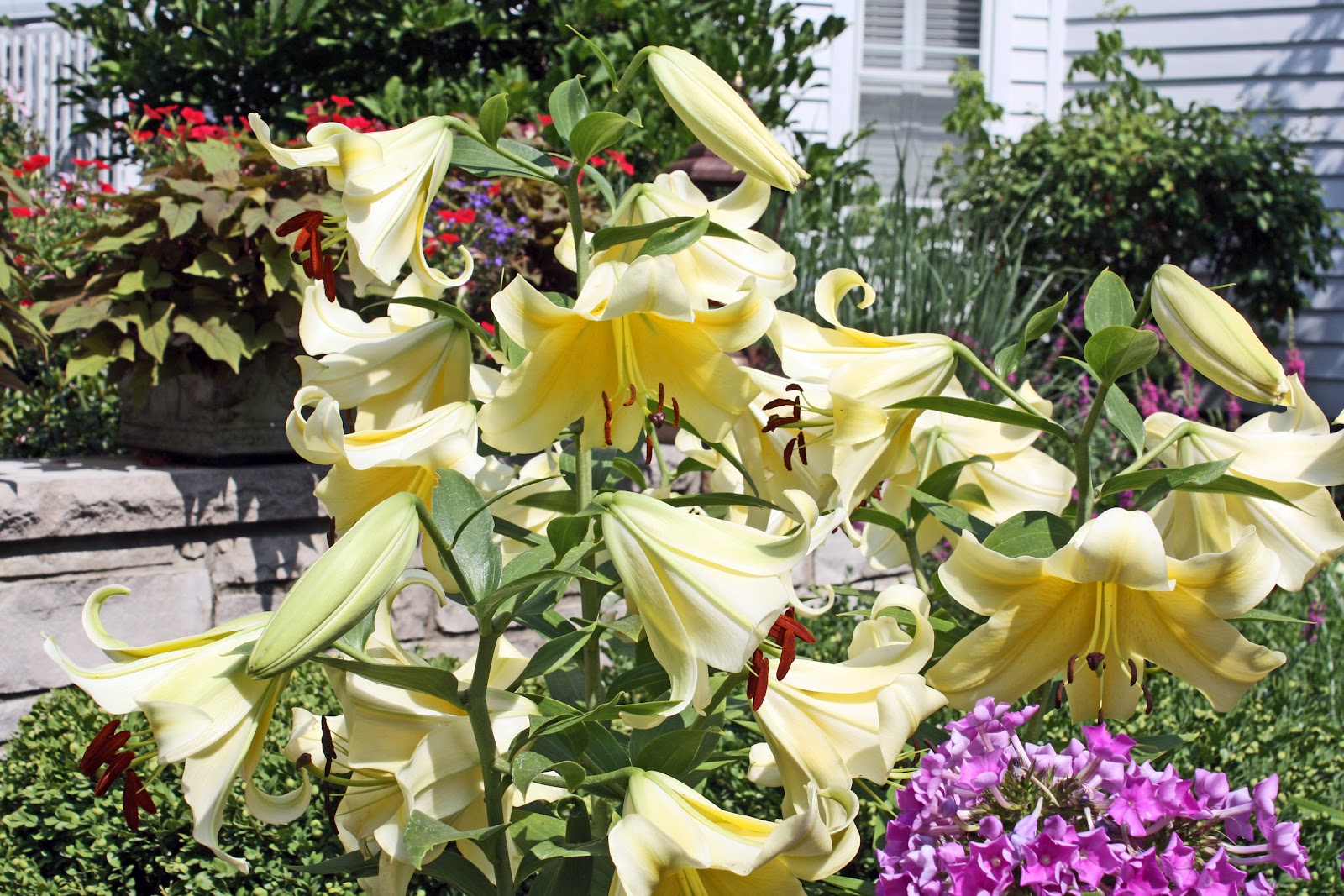
Orienpet Conca d'Or
This is wonderful mid-size lily that is striking in the front border.  When cut the stalks will be hidden by the shrubbery and and other plantings.  The lighter colored lilies do better in the heat, darker ones tend to fade in full sun

The heat has been intense, over 100 degrees with little rain but all of these plantings have weathered well with some water each day.  The hydrangeas and rhodies do not do well in the heat no matter how much you water (one rhodie lost).

Supertunia Vista Bubblegum
It was 102 degrees when I took this photo.  Lots of plants in the garden look a little weepy, not this one!

My goal is to have plants that hold up to the heat in containers and there aren't many.  However, this is one that does in baskets on my fence.  It isn't always exciting to have just petunias in a container, but it's alive and beautiful with minimal watering!

Again, not always exciting, cactus, crotons and purslane, but they love the heat and look great all summer.

Our climate is not what it used to be and slowly I am beginning to choose more appropriate plantings and using methods such as more dense planting to conserve soil moisture in times of extreme heat.  I have also learned that the larger the planter the easier it will be to maintain container plants throughout the season.  Makes sense doesn't it? 

Friday, June 29, 2012

Heat Lovers

We need really tough plants now!  I guess we could have seen this coming with the past few summers hotter than hot, revamping garden beds, rethinking containers plants, looking for xeric perennials that can withstand this type of climate.

Mary Todd daylilies can certainly take the heat but all daylilies need to be watered to thrive.

Ice Carnival Daylily thrives at the end of the vegetable garden, almost removed them this year, but they have performed better than ever.

The heat many times causes yellow leaves on the dayliles, just pull them off as you see them, will not harm the plant.

Blue Paradise Phlox
Phlox can take the heat but need to be watered (see hose ready in background)

Laura Phlox

Becky Shasta Daisy
Loves the heat as long as you cut off spent blooms and water if wilted

Echinacea Kim's Knee High Red and Mango Meadowbrite

During the winter I received a media order sheet from Renee's Seeds.  I ordered lots of goodies from Renee and am growing them in my garden.

The veggie garden is lush this year with Big Daddy tomatoes (supposedly an improvement on Better Boy) and Celebrity determinate tomatoes on the end.  The lettuce is Stardom Mix from Renee's Seeds.

This is an Oak Leaf lettuce that I planted with a mix, lasts even through the hot weather and remains tender.

Vanilla Berry Nasturtium

Cup Of Sun Nasturtium

Profumo di Genova Basil

Peppers love the heat, I have Mariachi hot ones, Sweet Banana and Jalepeno

We all know that you don't plant cucumbers until it heats up!  This one is Fanfare and is super disease resistant.

Some of the more delicate perennials even like the heat like Blue Sunshine Geranium that weaves through the other plantings without overpowering them.

Rozanne Geranium on the right weaves throughout the garden with abandon.

Don't be afraid to trim Rozanne back to keep it within bounds.  Do not shear it to the ground or you may wait forever to get new blooms.

Orienpet Lily Altari

I thought the lilies would wilt in this extreme heat but no they stand tall.  However, the darker colors will fade out in the heat.  It is not the sun but the intense heat which causes this fading.

Orienpet Lily Boogie Woogie


The above two Orienpet Lilies are shorter than many of the others.  This is something to think about when planting lilies as many of the taller varieties require staking.

Orienpet Lily Lavon is one of my favorites but it does grow close to six feet tall.  So far, it is free standing without support.

After 100 degree heat yesterday we had severe thunderstorms today but the lilies came through it still standing.

Boxwoods do not require a lot of water but I did give them some extra today.  Many plants can take the heat but cannot be without water.

I am getting ready for the Fourth of July, making some pulled pork, going to the village parade and the wonderful craft fair.

My containers are pretty simple this year, cordyline, redhead coleus and silver falls dicondra.  Oh, the sparklers are dried Allium Schubertii.