Thursday, September 01, 2011

It's Time For The Cabbages!

Some of you may remember last year that this was the time of year I pulled out my summer container plantings and went on a hunt for ornamental cabbages.


I am sure there will be some small cabbages in the hayracks.

Cabbages are wonderful in the fall garden opening up pink, red and white.  I will add some pansies and some gourds and small pumpkins when it gets closer to Halloween.  Yikes, did I say Halloween already?

I thought maybe this year would be different but it's not, same intense heat and lots of moisture so the plantings are beginning to look done even though I have fertilized and trimmed often.


The concrete containers by the garage were just fine for most of the summer but I am having trouble keeping them watered because of the size of the roots.  They are just begging for a big cabbage!


Added Rudbeckia and cabbage, kept the Blue Mohawk Rush from the summer container.  This cabbage will open up as it grows to a beautiful rose pink.

I have some large feathery cabbage pictured in the tall brown ceramic pots.


Pineapple Splash Coleus, impatiens, fuchsia, angelonia and dracena held up well during the summer, but now it is a minimized fall planter with cabbage and the full grown dracena from the summer.


The cabbage is enough "pop" in this container for the fall.

I did plan ahead this year with colors and plants that I could utilize in my fall planters such as grasses and bronze colored sweet potato vine.


Even though the colors look fall, the sweet potato vine and impatiens will be gone with the first hint of cold weather.  Diamond frost euphorbia will hold up until frost as will the carex grass.  I am sure there will be cabbages in these front planters also.


The Emerald Isle Sweet Potato Vine was a beauty all summer and the Irish pots will be cleaned and put away for the winter.


The Bronze Sweet Potato vine was a surprise this year flowering off and on all summer.

I am trying to avoid doing too many mums as they do not hold up over a long period of time and I do not have room to plant them in the garden with the slim hope that they might come back next year. Mums do bloom at different times just like Daylilies so you can plan succession blooming.  It is not an easy plan as most nurseries do not designate on their tags which are early, mid-season, late or extenders.  This can be researched on the Internet. Asters in containers look great and then fizzle out before their time.

I have found that perennial sedums (like Vera Jameson used as a spiller), annual rudbeckias, grasses, cabbages, Bright Lights Kale, Cordyline, Dracenas and Pansies are long lived in fall planters.  Plug in a few small mums if you can't do without them and then you won't feel so bad pulling them when they are done.

Fall is the shortest time frame for containers so think ahead what you can use in your containers that are perennials and can be moved into your garden before a hard freeze.  I even saw phlox in a fall container at one of the nurseries.

Friday, August 26, 2011

A Happy Ending

It doesn't have to be the end of summer blooms if you have the right plants and, I guess I have to say this, are a consistent deadheader!

Some great phlox like this deadheaded Bubblegum will make your fall more enjoyable.  Not all varieties bounce back like this one!

Choose some late blooming daylilies like Sandra Elizabeth

Of course a Limelight Hydrangea will delight you through the summer, fall and winter.

Mary Todd Daylily has been trimmed down and a couple of weeks after it is time to pull out all of the brown stems you see to the left and voila you have a fresh green plant again!


Heucheras are in their glory this time of year not only for their colorful leaves, Pistache, but for the airy flowers they produce.


This is one of my favorites, Heuchera Purpurea, not so much for the leaves but their flowers are wonderful.

Heuchera Raspberry Ice is a very hardy one also with pink flowers.

Keep cutting the spent flowers down to the ground on heuchera and they will bloom throughout the fall.

Max Frei Geranium is interesting in that when you deadhead it in the early summer it just sits until now when it begins flowering again.

Look for shrubbery that has interest through more than one season like Ninebark Summer Wine.


This is another multi-season shrub Dark Horse Weigela, pink flowers and dark bronze leaves for three seasons.

You can extend the season with other non-flowering perennials like the ferns that are anything but green.

Japanese Painted Fern is one that is showy throughout the spring, summer and fall in my area, great colors that are more appreciated in the fall.

Autumn Fern becomes more showy in the fall with some of the fronds taking on an orange glow.


Monday, August 22, 2011

A Summer Report Card

You know we all do this at the end of every summer, we evaluate what we have grown this year, move things around, put in some new plantings and look forward to having the perfect garden next year.


I am pleased with the Northwind Panicum along the south side in the front.  They are in a very narrow strip but so far so good.


Panicum can be left up during the winter to turn a soft tan color, not prone to flopping.  However, I do band it along the bottom to keep it from encroaching on the pathway.  It can also be ringed in the spring for a virtually invisible support,

This is what keeps a gardener going that constant reaching for the carrot knowing that it will never be attainable but it is sure fun and stimulating to try.  I hope all beginning gardeners will realize that the veterans are still trying to do better each year.


I don't know how it could get much better than Limelight Hydrangea, tons of blooms each year, virtually carefree.  I do prune it each spring in a semi-circle and fertilize with an organic fertilizer for acid loving plants by Espoma.


The blooms on Limelight will change from green to white to pink to rose and can be easily dried.  They can also be successfully spray painted for using outside in holiday arrangements.

There have been years when I wanted to get rid of the Lirope but this year it looks especially lush.  I am slowly adding additional plantings to this area like the new Autumn Ferns this year.


The front garden is beginning to take shape looking south with more perennials, dwarf shrubbery and very few annuals except in the porch containers.


More perennials and shrubbery looking north with the new Ninebarks along the perimeter.

I get dismayed with the weather each year and in the past few years the deluge of insects and diseases I had never heard of before


This is Arnie's Choice rejuvenated after being trimmed down with Plumbago filling in as a ground cover.  I put in some small cabbages because of the bulbs underneath so we will see how big they get.


Endless Summer Hydrangea bloomed once this year and sparsely at that.  I don't know why I keep thinking it will get better!

I almost pulled out Cordyalis a couple of years ago because it multiplies and spreads to areas where it was not planted.  However, it is very easy to pull out, so I decided to keep it.  It has turned out to be very desirable along the north side flowering all summer oblivious to the heat and moisture,


Unique Hydrangea is always a reliable performer, changes to pink to rose and dries beautifully.


Variegated Solomon's Seal gets high marks for withstanding all types of weather conditions even the hot air from the air conditioners that it surrounds.  That's just morning haze in the background!

Mary Rose is a David Austin Rose and survived better than many of the others with the rose midges and the Japanese beetles.

All The Rage has been my best rose this year almost impervious to the midge and the Japanese beetles.  It opens up to a much lighter peach color.  It is high on the list of desirable roses.

Carefree Beauty is blooming again but it was not protected against the midge or the Japanese beetle.

Knockout Rose Blush was affected all summer with the midge and the Japanese beetles, not a great report card for the Knockouts.


Pink Knockout was also affected by the Japanese Beetles and the Rose Midge but is coming back maybe for a fall revival.


Pink Promise is an award winning Hybrid Tea Rose but it has been most affected by the diseases for the past few years.  It has done much better this year even though it has been affected by the midge disease and the Japanese Beetles.

Pink Meidiland has been blooming continuously all summer, lightly affected by the midges and Japanese Beetles.

Brunnera Jack Frost
Looks great in the border all summer

The new introductions entice us each year as we are always eager to improve on what we have or desire to have, this also is not always an attainable goal.

Bubblegum Phlox was new this year and is highly recommended as a great rebloomer.

Laura is a very long blooming phlox (foreground) still blooming from the beginning of July, Franz Schubert has already been deadheaded and is reblooming.


In the alley garden the plantings along the fence tend to lean forward because they are being pulled by the sun (phototropism).  This is common when plants are put against walls and fences and not getting light from all directions.  So, I have solved this problem by ringing the grasses and Centhranthus with inexpensive green metal rings from Home Depot.  I did not do the Blue Fotune Agastache and regret that I didn't, leaning heavily after every storm.  You do not see the rings once the plants begin to grow.

Friday, August 19, 2011

How Does Your Garden Grow (Part 2)

As I ventured out into the fields, it was row after row of color.  All of the plantings were labeled with the variety, NEW if they would come out next year and EXPERIMENTAL with the type of plant and a number.

The New introduction Red Whopper Begonia is on the left in full sun!

This is Angelonia Archangel Pink
(looks more purple than pink but very full flowered)

This is an Experimental Celosia
(no name yet just a number)

Gomphrena Qis Red and Fireworks
This is a large airy spreading selection, have not seen this in the nurseries.

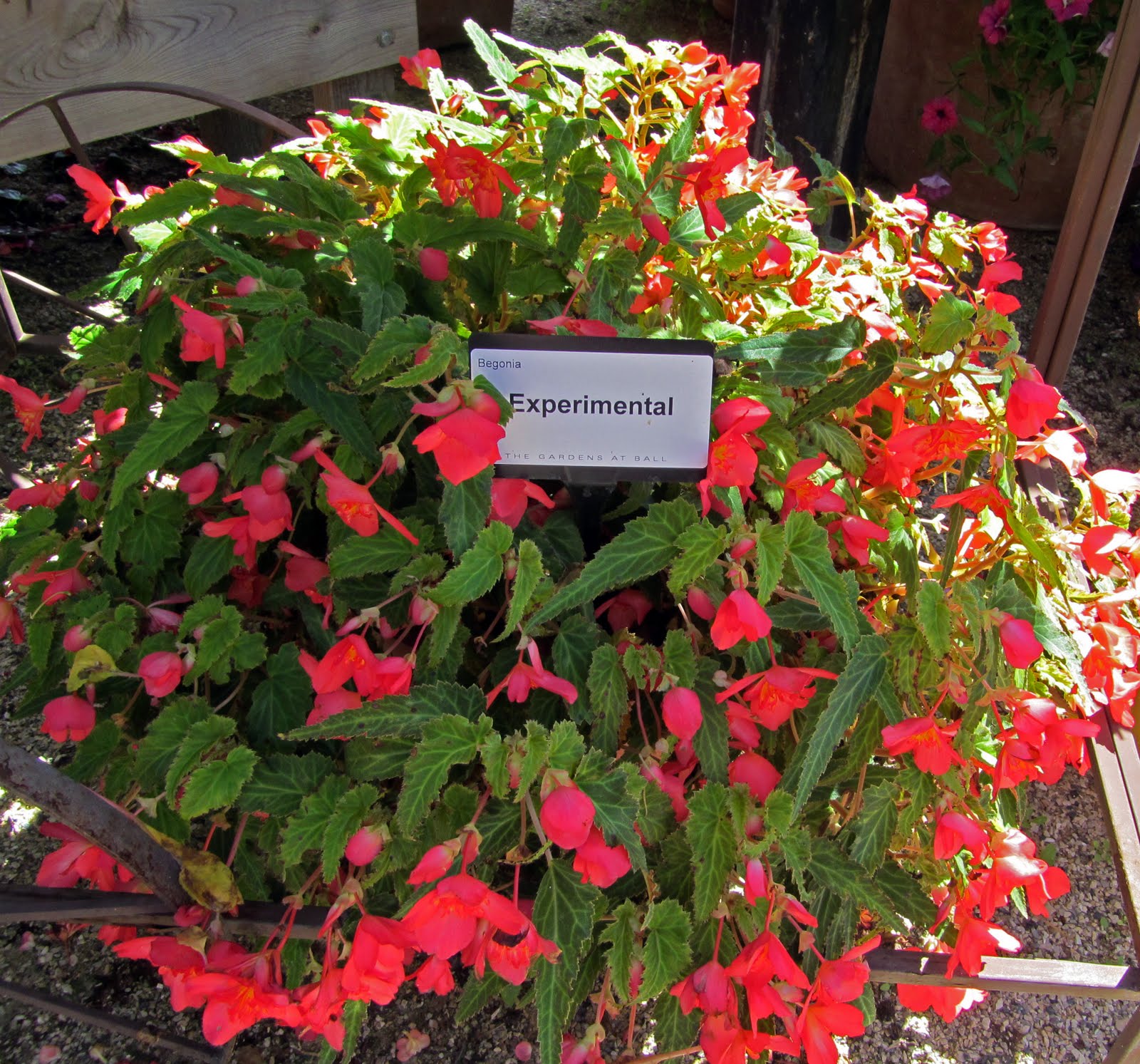
Experimental Hanging Begonia

Experimental Curly Parsley
(much tighter crown development)

What I am beginning to figure out is that if it is experimental it does not have a name just a number, test garden plants have names and if they work out well they are marked "New" and put on the market in the near future.  Many of their previous introductions are mixed in with all of these others so it does become confusing if you are not already acquainted with the selections.

Zinnia Zahara Double Fire is available through Burpee Seed, in fact I grew this for the south side of my home.  However, it was in very limited supply as a grown plant at the nurseries.


Veronica Atomic Blue

Spreading Salmon SunPatiens

Phlox Top Shelf Grenadine Dream
There were several phlox in the test garden already given names but this one looked the best after all the heat we have had.

There are many perennials in the test gardens but they have suffered with the intense heat we had, coneflowers were not worthy of photographing and many plantings had completely died out.

This was a great looking Butterfly Bush, no name that we could find, upright and full of flowers.  They do not deadhead at Ball, so this drove me crazy wanting to make these look even prettier than they were.  They just do not have the manpower to do this with all of their plantings.

Ninebark Ruby Spice

Hydrangea Sweet Summer
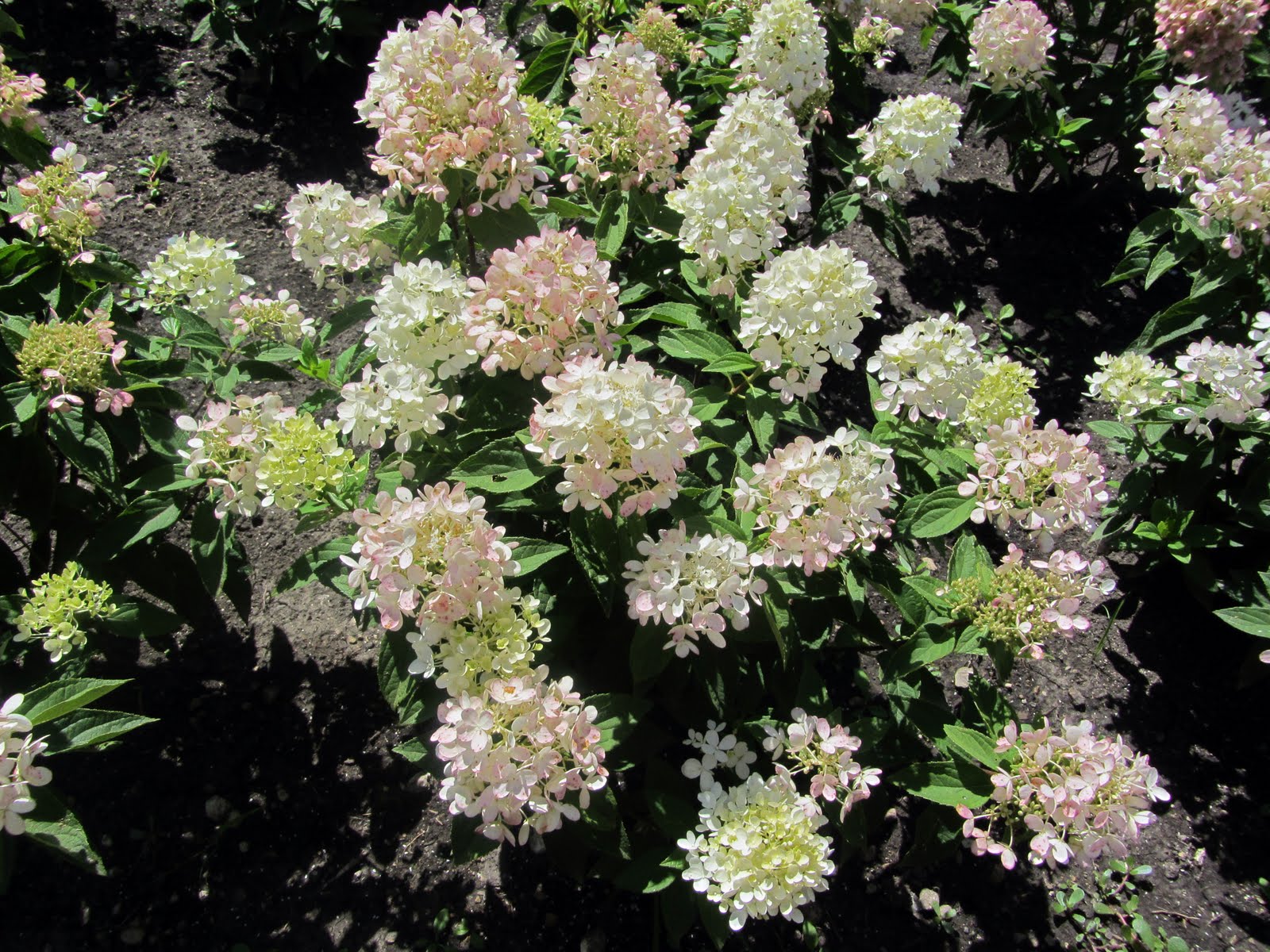
This was a wonderful looking hydrangea, smaller about three feet full with white flowers speckled with some pink tones.

Hydrangea Fire and Ice
(smaller hydrangea and most of the blooms were gone on this one, supposedly the flowerheads make stunning color changes throughout their blooming season)


Hibiscus Luna Rose
(a rounded bush type hibiscus)

Coleus Redhead Container

Cleome Container

Dicondra Groundcover With Petunias
(I have seen this groundcover in the nurseries but have never bought it, looked wonderful spilling over the rocks)

Container planting with impatiens and gold coleus in upper right corner, never have seen a coleus like this!


Wall of Coleus


I think they might be using the Woolly Pockets for the hangings on arbors and pergolas.

This is a new succulent that looked interesting called Bush Pearl.